
Ever wondered who’s behind your weekly grocery shop? The ownership of Asda, one of the UK’s major supermarket chains, has changed hands several times throughout its history.
As of June 2024, Asda is majority owned by TDR Capital, which holds 67.5% of the company, while Mohsin Issa owns 22.5% and Walmart retains a 10% stake.
The recent ownership shift came when Zuber Issa sold his shares in the supermarket, marking a significant change in the company’s leadership structure. This move represented a split between the billionaire Issa brothers, Zuber and Mohsin, who had previously acquired Asda together.
The brothers, known for building the EG Group from a single petrol station into a global business, had made headlines when they first became involved with Britain’s third-largest supermarket chain.
Key Takeaways
- TDR Capital holds the majority stake in Asda at 67.5%, with Mohsin Issa and Walmart as minority shareholders.
- The Issa brothers divided their business interests in 2024 when Zuber sold his 22.5% stake in the supermarket chain.
- Asda has transitioned from American ownership under Walmart to primarily British ownership under TDR Capital and Mohsin Issa.
Ownership History
Asda has changed hands several times throughout its history, moving from a public company to international ownership and then to British hands in recent years.
Walmart Era
Walmart, the American retail giant, acquired Asda in 1999 for £6.7 billion. This acquisition marked the beginning of Asda’s time under international ownership.
During Walmart’s ownership, Asda became Britain’s third largest supermarket chain.
Walmart implemented its famous everyday low price strategy at Asda, helping the supermarket compete effectively in the UK’s competitive grocery market. The American retailer maintained majority ownership for over 20 years.
In 2020, Walmart decided to reduce its stake in Asda, beginning the transition to new ownership. However, Walmart didn’t completely exit – they retained a minority stake in the business.
Acquisition by TDR Capital and Issa Brothers
In 2020, TDR Capital and the Issa brothers announced their acquisition of Asda from Walmart. The deal valued Asda at £6.8 billion. TDR Capital is a private equity firm, while Mohsin and Zuber Issa are British billionaire entrepreneurs who founded EG Group.
Initially, the ownership was split between TDR Capital, the Issa brothers, and Walmart, which retained a 10% stake. In 2024, the ownership structure changed when Zuber Issa decided to sell his shares in Asda.
Following this change, TDR Capital became the majority owner with 67.5% of Asda. Mohsin Issa retained 22.5%, while Walmart continued to hold its 10% stake. Mohsin now serves as a non-executive director of Asda.
Current Owners
Asda’s ownership structure has changed significantly in recent years, with private equity firm TDR Capital now holding the majority stake in the popular UK supermarket chain.
Role of TDR Capital
TDR Capital has become the majority owner of Asda, holding a substantial 67.5% stake in the company. This significant change happened after Zuber Issa sold his shares in the supermarket giant.
The private equity firm has been involved with Asda since the Walmart sale, but their position has strengthened considerably in 2024. Their majority control gives them the biggest say in Asda’s strategic direction and business decisions.
TDR Capital works alongside minority owners to guide Asda’s future in the competitive UK grocery market. Their expanded role comes at a time when UK supermarkets face challenges from discount retailers and changing consumer shopping habits.
Issa Brothers’ Business Ventures
The Issa brothers, who built their fortune with Euro Garages from Blackburn in Greater Manchester, have recently divided their business interests. Mohsin Issa remains a co-owner of Asda with a 22.5% stake, while Zuber Issa has completely sold his shares in the supermarket chain.
This split represents a significant change for the brothers who originally purchased Asda together with TDR Capital. Their story began in Bury, where they built a successful forecourt business that expanded throughout the UK.
The brothers’ separation of business interests marks a new chapter in their entrepreneurial journey. While Mohsin continues his involvement with Asda, Zuber has chosen to focus on other ventures. Former majority owner Walmart still maintains a 10% stake in the business.
Asda’s Business Profile
Asda’s operations extend beyond traditional supermarkets to include petrol stations, convenience stores, and a growing franchise network. The company has evolved its business model to compete in multiple retail sectors across the UK.
Petrol Stations and Forecourt Operations
Asda significantly expanded its forecourt presence when the Issa brothers and TDR Capital acquired the supermarket chain in 2021. The Issa brothers brought extensive experience from their EG Group, a major forecourt operator.
In 2023, Asda integrated part of the EG Group’s UK forecourt business into its operations. This move added hundreds of petrol stations to Asda’s portfolio, strengthening its position against competitors like Tesco and Sainsbury’s who also operate filling stations.
Asda’s forecourts typically offer competitive fuel pricing, which helps drive customer traffic to attached convenience stores. Many locations partner with major fuel brands while maintaining Asda’s pricing strategy.
Convenience Stores and Franchisee Network
Asda has been expanding its smaller format stores to reach customers in locations where full-sized supermarkets aren’t feasible. These convenience stores operate under the Asda Express brand.
The company also runs a growing franchisee program allowing independent retailers to operate under the Asda brand. This approach helps Asda extend its reach without the full investment of company-owned locations.
Most Asda convenience stores feature:
- Fresh produce sections
- Ready-to-eat meal options
- Essential grocery items
- Selected popular Asda product lines
This convenience network competes directly with Tesco Express, Sainsbury’s Local, and other small-format grocery retailers across the UK.
Supermarket Operations and Market Share
Asda remains one of the “Big Four” UK supermarkets alongside Tesco, Sainsbury’s, and Morrisons. Under majority ownership by TDR Capital, the company has worked to strengthen its market position.
Asda’s supermarket operations focus on value-conscious shoppers with competitive pricing strategies. The chain operates stores ranging from superstores to smaller supermarkets across the UK.
The company has faced increasing competition from discount retailers like Aldi and Lidl. In response, Asda has:
- Expanded its own-brand value ranges
- Invested in store renovations
- Enhanced online grocery delivery services
- Developed distinctive product lines like George clothing
Despite market pressures, Asda maintains a significant market share in the UK grocery sector, typically holding 13-15% of the market depending on measurement periods.
Financial Performance

Asda’s financial situation has changed significantly since its acquisition by private equity. The supermarket faces challenges with debt while trying to maintain competitive sales performance in a tough market.
Debt and Leverage
Asda currently operates with £3.8 billion in net debt, a substantial figure though lower than the £4.4 billion at the time of its acquisition. This high debt level comes from the leveraged buyout structure used when TDR Capital and the Issa brothers purchased the company.
The debt burden has put pressure on Asda’s operations. Financial experts have expressed concerns about how this leverage might affect long-term growth and investment capabilities.
Recently, TDR Capital increased its ownership stake when Zuber Issa sold his 22.5% holding to the company. This ownership change hasn’t immediately altered the debt situation but may influence future financial strategies.
Like-for-Like Sales and Profitability
Despite challenging market conditions, Asda has reported mixed results in recent performance metrics. The company’s online segment showed positive movement with George.com sales up 3.9% and online grocery increasing 1.4% in a recent quarter.
However, overall performance has been described as “embarrassing” by some analysts. This hasn’t stopped the owners from sharing a £44 million payout despite the struggles.
Asda faces fierce competition from discount retailers like Aldi and Lidl. The supermarket has been working to improve its price positioning and product range to boost like-for-like sales in core grocery categories.
Market share has been under pressure as shoppers seek value during economic uncertainty. New initiatives in store formats and loyalty programs aim to reverse these trends and improve profitability.
Asda’s Expansion Efforts
Asda has pursued growth beyond its UK home market through various international ventures and strategic partnerships. These efforts have shaped the company’s global footprint while maintaining its British control.
US Expansion and Partnerships
Asda’s connection to the US market began when Walmart acquired the supermarket chain in 1999. This American partnership lasted until 2021, though Walmart still retains a 10% stake in the business.
During the Walmart years, Asda adopted many US retail practices and store formats. The company explored partnerships with American brands like KFC, bringing their food offerings into select Asda locations.
Asda also looked into acquiring US convenience store chains like Fastrac and Certified Oil, though these plans didn’t always materialize. These potential deals showed Asda’s interest in the American convenience store model.
Despite these efforts, Asda’s primary focus remained on strengthening its UK operations rather than building a major physical presence in the US market.
European Footprint
Asda’s European expansion has been more cautious compared to some competitors. The company tested waters in Germany in the early 2000s but faced tough competition from local discount chains.
In the Netherlands and Italy, Asda explored partnership opportunities rather than direct store openings. These markets presented unique challenges with different consumer preferences and strong local competitors.
An interesting connection emerged when Asda looked into potential collaborations with Australia’s Woolworths, which has its own European connections. Though they operate in different hemispheres, both retailers share similar challenges in competing with discount chains.
Despite these international ventures, Asda has maintained its British control, with TDR Capital now holding a 67.5% majority stake in the company.
Corporate Social Responsibility

Asda demonstrates a strong commitment to corporate social responsibility through various programs focused on environmental protection and community support. Their initiatives reflect the company’s dedication to making a positive impact beyond retail.
Environmental Initiatives
Asda has made sustainability a core part of their business strategy. They publish an annual Environmental, Social and Governance (ESG) report highlighting their progress and commitments.
In their most recent reports, they outline concrete steps toward reducing their environmental footprint across UK operations.
The company focuses on several key areas including reducing plastic waste, lowering carbon emissions, and improving energy efficiency in their stores. They’ve implemented recycling programs and work with suppliers to create more sustainable packaging options.
Asda has also set ambitious targets for reducing greenhouse gas emissions and increasing the use of renewable energy across their business. These initiatives help position them as a more environmentally conscious option on the High Street.
Community Engagement
Asda actively supports local communities through various programs and charitable partnerships. They’re particularly known for their support of the Tickled Pink charity, which raises funds for breast cancer awareness and research through multiple fundraising events throughout the year.
The company earned recognition for their community efforts, winning the Business in the Community (BITC) Award for Corporate Social Responsibility. This achievement highlights their ongoing commitment to making a positive impact in the communities they serve.
Asda’s co-owner, Mohsin Issa, has emphasized his commitment to growing the business for the long term while maintaining these important community connections. Their community programs help boost employee satisfaction, as staff feel happier when given opportunities to contribute to meaningful causes.
Cultural Impact
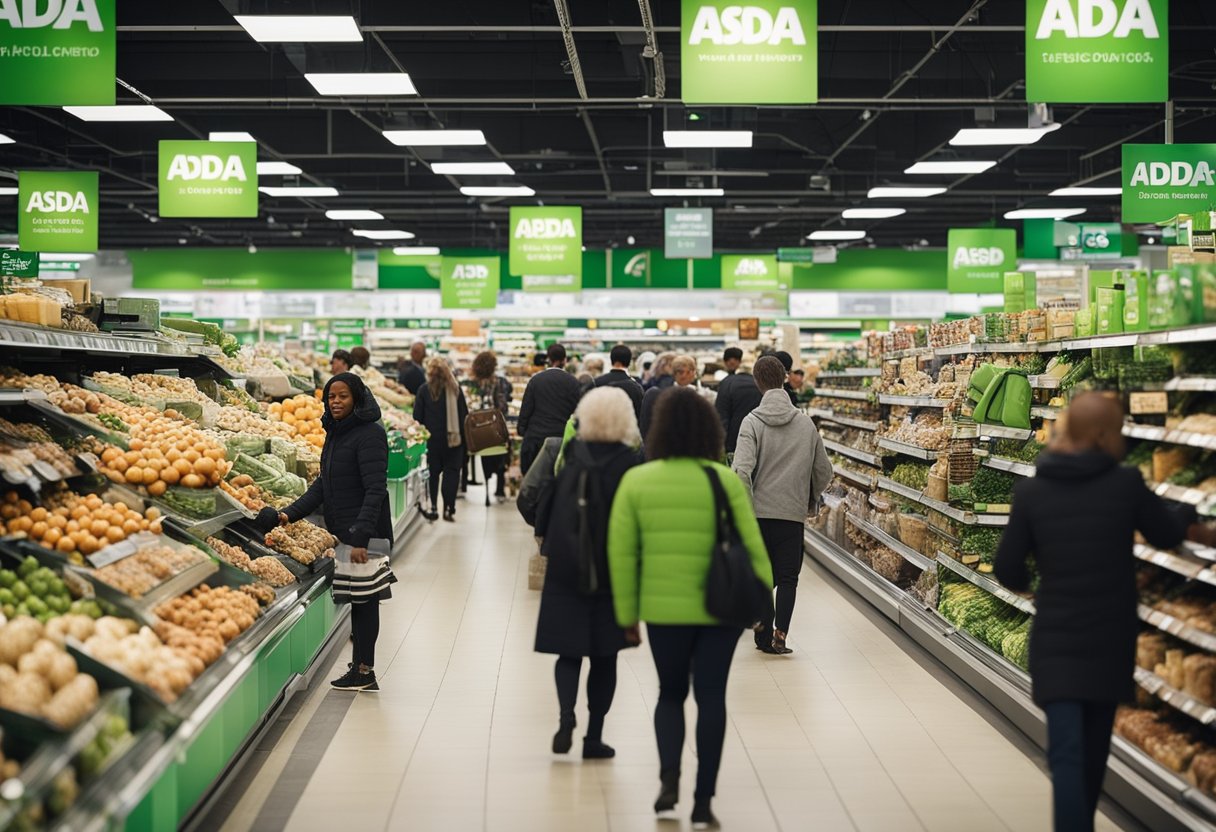
Asda has deeply shaped British retail culture while making significant contributions to local economies across the UK. The supermarket chain’s community-focused approach has helped create jobs and support regional suppliers, reflecting its evolution from its Yorkshire roots to nationwide influence.
Asda’s Influence on British Retail
Asda has played a key role in transforming the British High Street since its foundation. After starting as a Yorkshire-based company, it expanded nationwide, introducing the American superstore concept to Britain. This forever changed how Brits shop!
Asda’s pricing strategy has been particularly influential. Their famous “rollback” campaigns and price guarantees have forced competitors to respond, benefiting shoppers across the country. They pioneered affordable fashion through George clothing, making stylish options available to all income levels.
The chain’s marketing has entered British popular culture with memorable campaigns and slogans. Their “pocket tap” gesture became instantly recognizable to millions and symbolized value shopping for a generation of British consumers.
Contribution to Local Economies
Asda stores serve as important economic anchors in many communities. They employ over 140,000 people across the UK, providing vital jobs in areas including Lancashire where economic opportunities might otherwise be limited.
The company’s supply chain supports British farmers and producers through their “Sourced by Asda” program. This initiative highlights locally-sourced products and helps regional businesses thrive.
Interestingly, the Issa brothers who acquired Asda have roots in Gujarat, India, bringing a multicultural dimension to the company’s leadership. Their success story from humble beginnings to owning one of Britain’s largest retailers has inspired many entrepreneurial communities.
Asda’s community grants and charity partnerships further strengthen their positive impact on the local economy. Their Green Token Giving scheme allows customers to vote for which local causes receive support, directly connecting shoppers with community investment.
Leadership and Management

Asda, one of the UK’s major supermarkets, has recently seen significant changes in its leadership structure.
In September 2024, Mohsin Issa stepped back from his executive leadership role to focus on his position as sole CEO of EG Group.
The current leadership team is headed by Allan Leighton, who serves as Executive Chairman. Dame Alison Carnwath holds the position of Non-Executive Director, while Courtney Naudo works as Senior Vice President of Business Integration.
These leadership changes come after the Issa brothers divided their business empire. Zuber Issa sold his shares in the supermarket, leading to a new ownership structure.
TDR Capital now owns 67.5% of Asda, while Mohsin Issa controls 22.5%, and Walmart maintains a 10% stake. This restructuring marks a significant shift in how the company is managed.
Former Walmart executives have expressed disappointment with Asda’s current performance, suggesting challenges for the leadership team moving forward.
The company continues to adapt its management structure to address these challenges and position itself effectively in the competitive UK grocery market.


